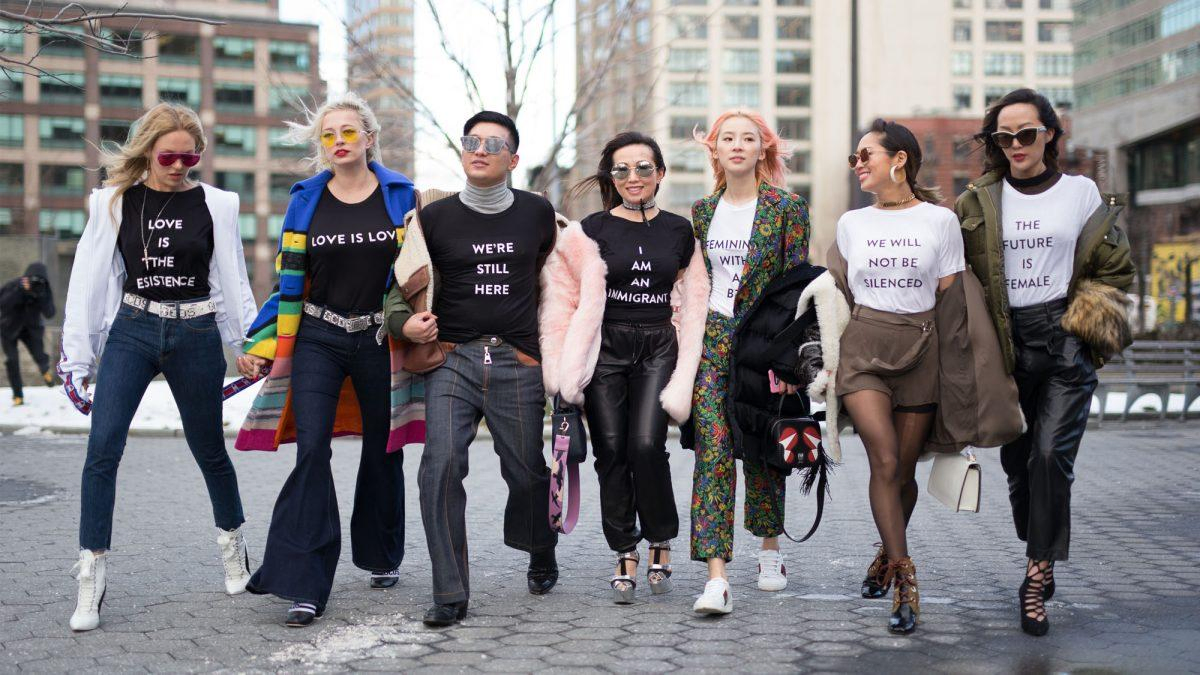
In today’s world, fashion is no longer just about aesthetics: it is a tool for communication, a vehicle for identity, and a mirror of social tensions. At this intersection of aesthetics and politics, the concept of social fashion or political fashion (often referred to as fashion activism or wearable activism) emerges with great force: it’s not just the garment one wears, but the message it conveys.
The Historical Roots of Political Dress
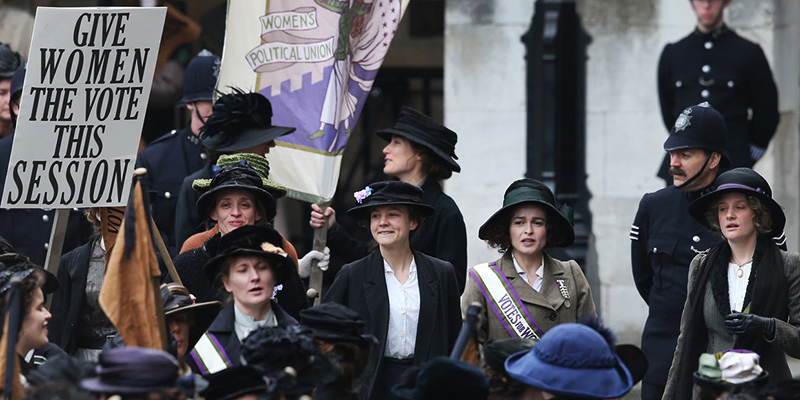
History offers many examples in which fashion reflected values and ideologies. In the early 20th century, suffragists adopted the colors purple, white, and green—featured on ribbons, hats, and scarves—to represent dignity, purity, and hope, respectively, making their attire a distinctive feature of the women’s suffrage movement.
During the 1960s, youth culture manifested itself through cuts, colors, and styles that broke with the past: the “Youthquake” phenomenon is a symbol of this. Throughout the 20th century, punk fashion—with its studs, ripped tops, and safety pins—also became a language of rebellion against social hierarchies and the dominant cultural industry.
In the institutional political sphere, figures such as Jackie Kennedy used “power dressing” to project an image of seriousness and authority; Margaret Thatcher adopted strict suits, often in her party’s colors; and Angela Merkel used simply cut jackets in distinct colors to convey simplicity and stability.Hillary Clinton also challenged the “political skirt” norm by wearing pants, signaling a symbolic evolution of women’s roles in the public sphere.
Thus, even in recent times, clothing has been a sign of belonging.
The Concept of Fashion Activism / Wearable Activism
Today, we explicitly speak of fashion activism or wearable activism when social and political messages are not mere decorations but integral elements of the garment: slogans, symbols, recognizable color palettes, and “speaking” fabrics. Wearable activism can emerge from the grassroots—individuals, communities, and activist groups who choose to dress in shared symbols—or from the top down, with designers and brands incorporating political messages into their collections (e.g., civil rights, gender equality).
In this context, the consumer is no longer just a passive recipient but becomes an active participant: through purchasing and wearing these items, they support causes, spread ideas, and build connections with those who “act alongside them.” The so-called “conscious consumer” elevates the choice of a garment to a moral gesture, part of a broader change: I am not just choosing style, but ethics, politics, and values.
The Challenges and Contradictions of Activism in Fashion
However, turning garments into statements carries risks and contradictions:
- Exploitation and superficiality (fashion “slacktivism”)
- Sometimes “politicized” fashion remains nothing more than a marketing strategy: generic slogans, superficial campaigns, and symbolic but largely empty communications. There is a risk of reducing complex issues to “trends” devoid of substance.
- “Statement” garments vs. actual production
- It’s inconsistent to present oneself as a socially conscious brand and then support unsustainable practices. Those who use ecological or social symbols must ensure responsible supply chains, decent working conditions, and traceability. Otherwise, the message loses credibility.
- Exclusivity and Accessibility
- Often, “manifesto” collections are expensive and exclusive, accessible to only a few, which strips the message of its truly social dimension.
Despite these challenges, many examples demonstrate that socially conscious fashion, when approached with consistency and strategy, can be a catalyst for change.
The Role of Psicopatici Italia
Against this backdrop, a brand emerges that doesn’t simply clothe people but allows them to express their identity through FASHION WITHOUT LIMITS. Psicopatici Italia, in fact, is not just a brand, but a statement of identity: “every product is an extension of the wearer’s personality,” and style becomes rebellion and personality.
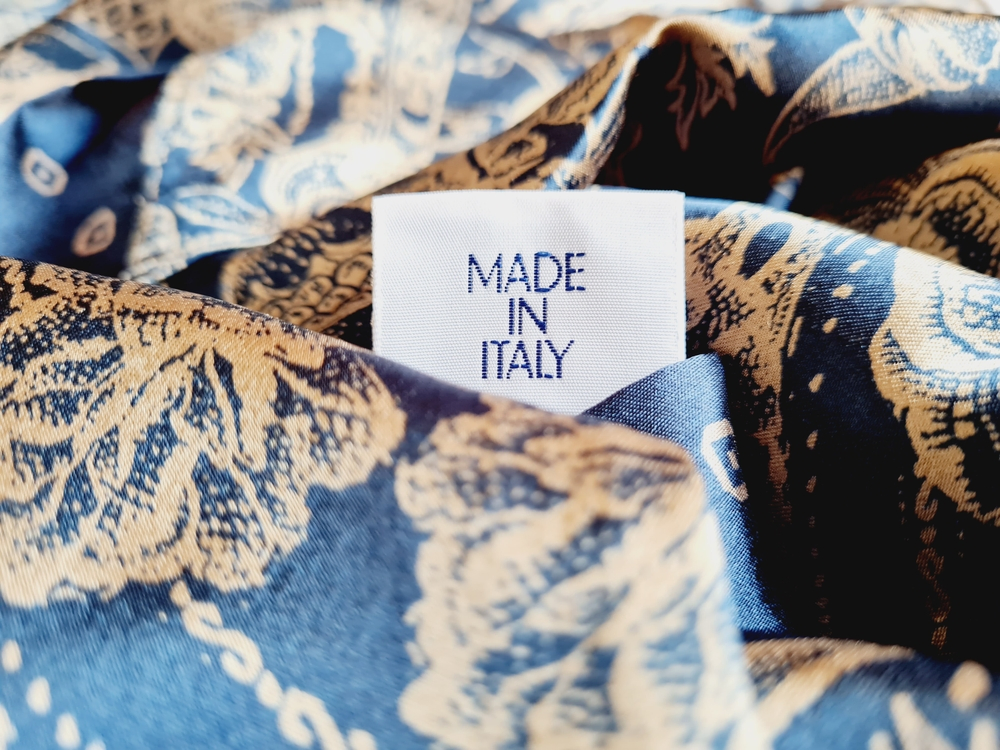
With roots in the Neapolitan tailoring tradition, the brand offers TOTAL CUSTOMIZATION of the product: from the base color to model variations, from buttons to accessories, from the inner lining to finishes and stitching, right down to the addition of various embellishments—in a process where the customer becomes a co-creator.
Psicopatici Italia, in other words: not just a garment, but an individual symbol of breaking the rules, an act of distinction.
This approach aligns with the idea of fashion as activism: it’s not about explicit slogans, but rather an ethos that rejects the norm and embraces uniqueness. In this sense, Psicopatici Italia falls into the category of brands (currently the only brand in Italy to offer such a commercial proposition) that turn the act of dressing into a declaration of freedom, a symbolic gesture that reflects a distinct identity.

Conclusion
Social and political fashion remind us that clothing is never neutral: it is interwoven with relationships, values, and tensions. When clothing becomes a manifesto, a protest, or an act of activism—through slogans, symbols, color palettes, graphics, or rebellious styles—it transforms the body into a vehicle of meaning.
But for this to truly work, the aesthetic message must be accompanied by consistency, ethical practice, and sincere storytelling. Otherwise, it risks remaining mere empty aesthetics. In a landscape where the conscious consumer demands transparency, brands that dare to defy (and resist) conformity deserve attention.
In the world of fashion-politics, Psicopatici Italia represents a contemporary example of how clothing can be a form of personal rebellion: more than just a brand, it is an expression of identity in which the wearer becomes an active part of the message.