Why Overproduction Is a Problem in Fashion
In recent years, the fashion industry has undergone profound transformations. Among these, one of the most significant is the emergence of made-to-order fashion, a production model created to address an increasingly critical problem: overproduction.
According to data from the Ellen MacArthur Foundation, over 92 million metric tons of textile waste are generated worldwide each year. In this context, brands that choose to produce only on order—rather than in advance—offer a concrete solution.
What Is Made-to-Order Fashion: Definition and Benefits
Made-to-order fashion—literally “made to order”—is a production model that is revolutionizing the apparel industry, offering a concrete solution to overproduction and excessive consumption. Unlike industrial mass production, which relies on forecasts and large inventories, made-to-order is based on a simple yet revolutionary principle: only what has actually been purchased is produced.
This approach drastically reduces:
- unnecessary production
- storage costs
- end-of-season clearance sales
It’s a strategic choice that combines efficiency and customization.
Why choose made-to-order fashion? 3 benefits for the consumer:
- Direct involvement
- You actively participate in the selection process and look forward to receiving the garment, knowing it will be made specifically for you. This will strengthen your emotional connection to the product
- Higher perceived quality
- Made-to-order production often involves more careful, artisanal craftsmanship. This approach reduces impulse buying and promotes more mindful consumption.
- Lower risk of making the wrong purchase
- The wait time required for production will make your purchase more deliberate. You’ll think twice before buying and tend to make choices that better align with your actual needs.
The Main Types of Made-to-Order Fashion
Let’s explore the main types of “made-to-order” fashion and the benefits of each model.
- Made-to-order fashion (or “fashion to order”) is a production model increasingly adopted by sustainable and innovative brands. Among the main types, Made to Order (MTO) stands out, in which garments are produced only after purchase: the customer chooses from predefined sizes, colors, and fabrics. This reduces waste and prevents unsold inventory.
- Made to Measure (MTM) adapts existing designs to the customer’s measurements, ensuring a superior fit without the cost of full custom tailoring. It’s ideal for formal wear and personalized shirts.
- With Bespoke, on the other hand, we enter the world of haute couture: each garment is created from scratch, made to measure, offering the highest level of customization. It’s perfect for bridal ateliers and exclusive gowns.
- Mass customization allows for the large-scale personalization of standard products (e.g., shoes, Denim) while maintaining production efficiency.
- Finally, on-demand fashion combines sustainability and technology: 3D printing, online configurators, and e-commerce enable production solely on demand.
The Role of Virtual Prototyping in Made-to-Order Fashion
In the world of made-to-order production, virtual prototyping represents a strategic transformation. This technology enables the shift from a physical process to a digital, dynamic, and user-centric workflow. The result? Greater customer engagement, reduced production times, and a highly personalized final product.
Interactive 3D Configurators
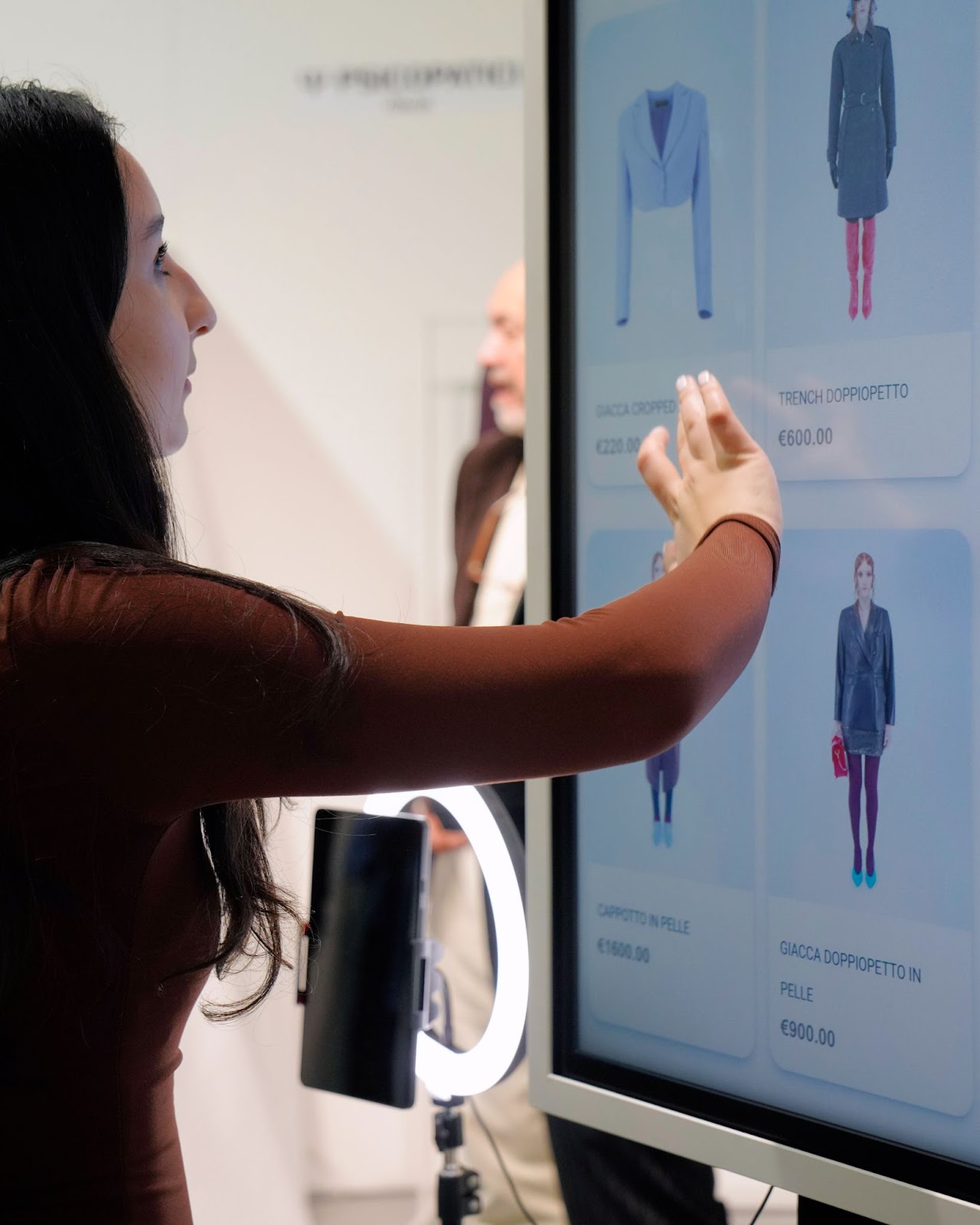
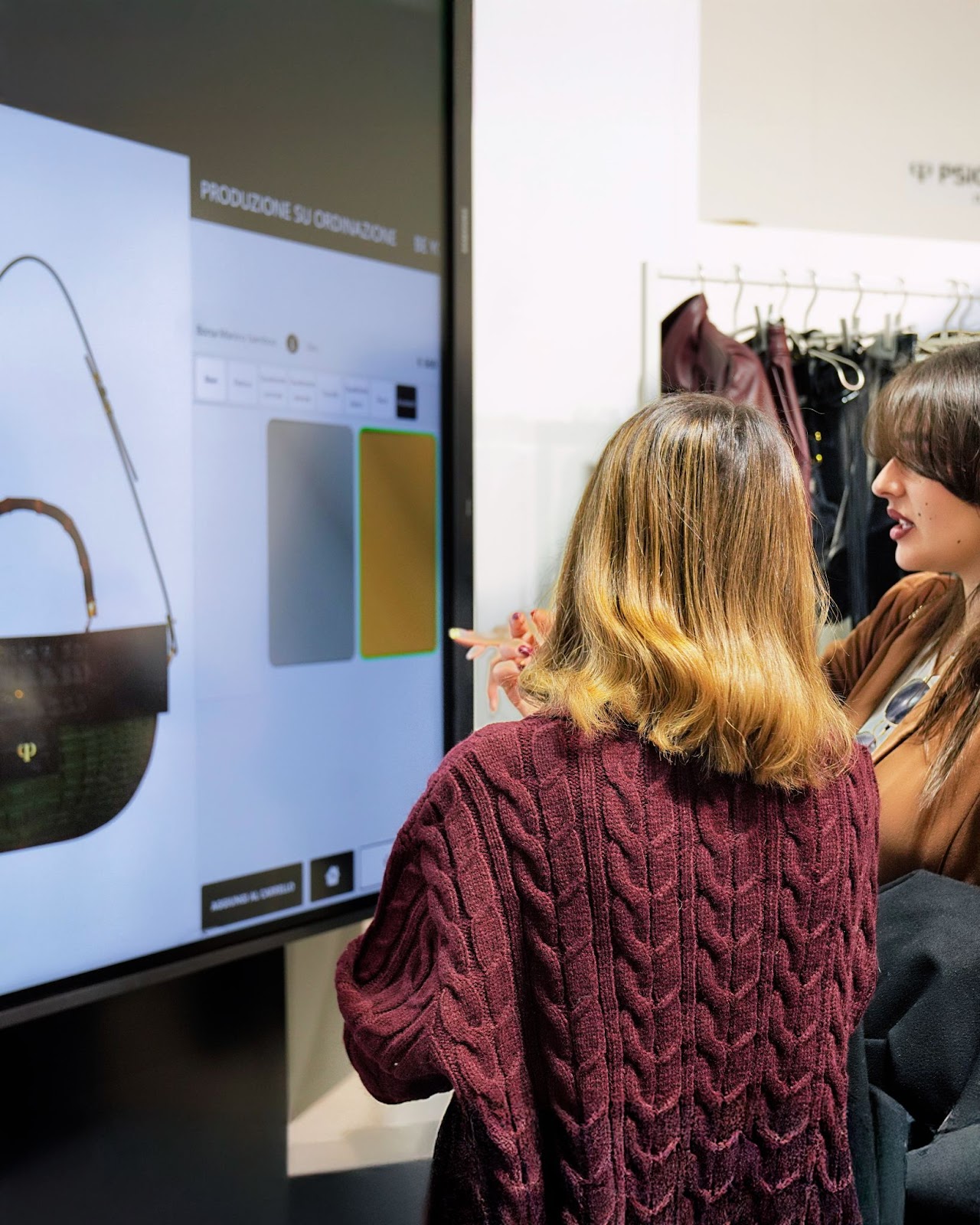
3D configurators allow users to view the product in real time, rotate it, zoom in on it, and customize it as they wish by choosing from a range of predefined options: colors, fabrics, cuts, buttons, accessories, engravings, and more. This type of experience increases customer engagement and satisfaction while reducing the return rate.
The configurator acts as a bridge between the customer and the creative team. Each configuration is automatically saved and sent to the production department, transforming the user’s creativity into a concrete, actionable order—without complex intermediaries.
Psicopatici Italia: Where fashion meets technology and adapts to you
Here, made-to-order isn’t just a strategy—it’s a philosophy. When you browse our catalog, all it takes is one click to enter a fully personalized experience: the double-breasted trench coat, for example—like every other garment—can be customized down to the smallest detail thanks to our interactive configurator. You can choose the color, the fabric, the buttons—and watch your garment take shape in real time. There are no imposed choices. There’s only your vision, transformed into reality thanks to technology that empowers creativity.
This is the quiet yet incredibly powerful revolution of Psicopatici Italia: creating fashion with vision. Combining cutting-edge software with sartorial expertise to create garments that last longer, speak to who you are, and never go out of style.

Conclusions
Virtual prototyping isn’t just a technological innovation—it’s the strategic lever that makes the made-to-order model scalable, sustainable, and profitable. Thanks to 3D configurators, real-time simulations, and predictive software, brands can offer an unprecedented customer experience while optimizing time and costs.
But the real change is cultural: a new central figure is emerging in the fashion world—the co-designer consumer. No longer a passive spectator, but a creative protagonist, capable of customizing every aspect of the product: materials, shapes, colors, and details. The barrier between designer and customer is breaking down, giving rise to an unprecedented co-creative process.
According to the report *The State of Fashion 2023* by McKinsey and BoF, 71% of consumers under 35 prefer brands that offer advanced personalization. By 2030, this trend will be one of the five key drivers of growth for fashion retail.
Fashion will no longer be imposed, but co-created. We at Psicopatici Italia have already figured this out. What about you?