In today’s fashion world, change is moving rapidly in the digital realm. From virtual fitting rooms to 3D avatars, more and more technologies are making it possible to virtually try on garments, blurring the line between online and offline. The result? Immersive, personalized, and—above all—more efficient shopping experiences.
In an era where time is precious and a top priority, virtually trying on clothes isn’t just a futuristic trend—it’s a real necessity.
Why has the need for virtual clothing try-ons emerged?
E-commerce in the fashion industry has grown exponentially. But along with it, the return rate has also risen—in online fashion, it can reach as high as 40%. One of the main reasons?
The real difficulty in accurately imagining how a garment would fit on one’s own body.
To address this need, the fashion industry has begun developing digital tools capable of:
- Reconstruct 3D models of the human body based on real-world data
- Apply garments to these models, simulating fit, drape, and proportions
- Suggest personalized sizes using intelligent algorithms
- Enable real-time virtual try-ons using AR (Augmented Reality)
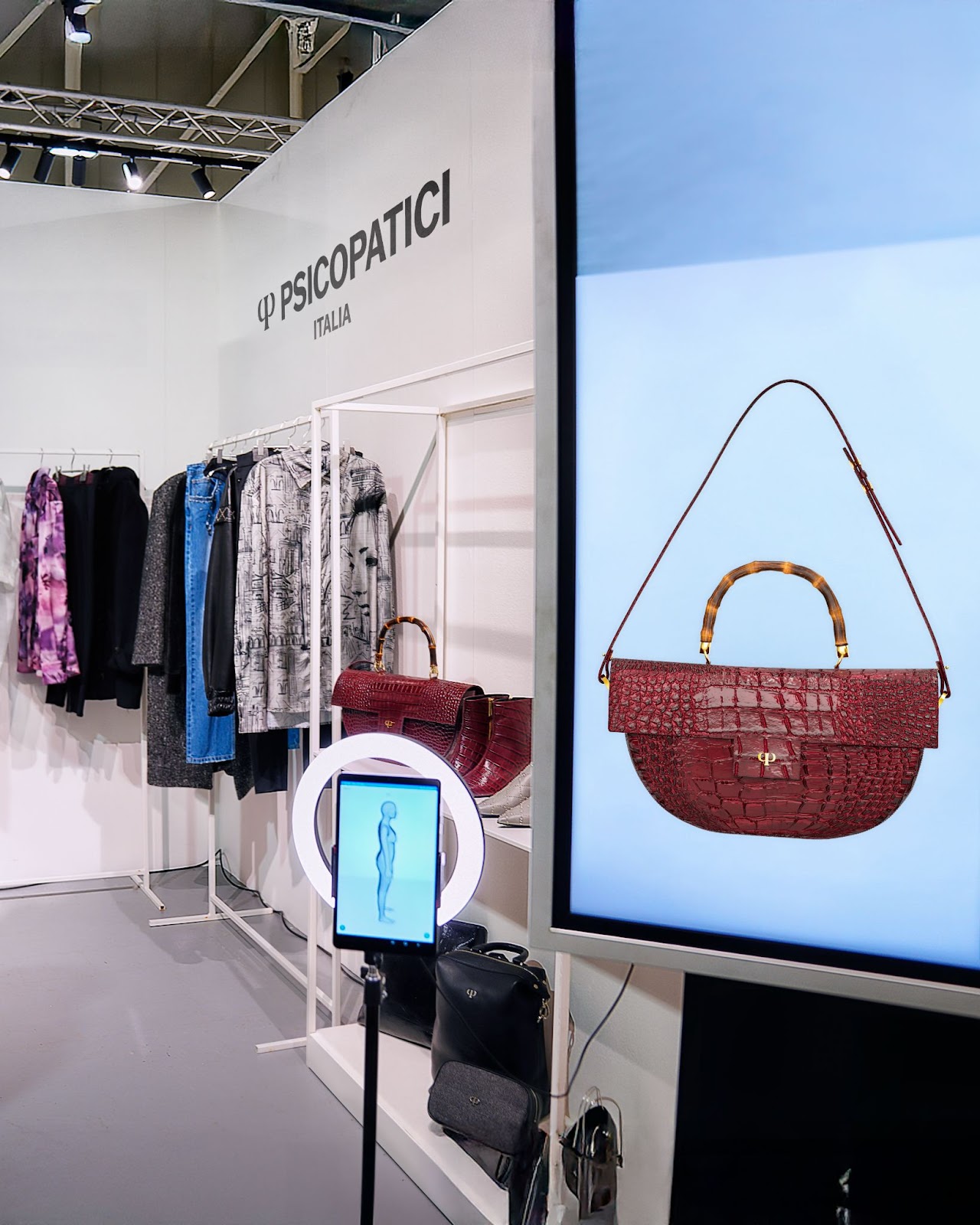
How Virtual Garment Try-Ons Work
Currently, there are two main approaches to “trying on” a garment virtually:
1. Based on personalized avatars
The user enters their measurements (height, weight, body shape, etc.) and scans themselves using a webcam or smartphone. This allows the system to generate a 3D avatar that accurately reflects their physical features, onto which the selected garment can be virtually applied.
Advantages?
- High visual fidelity
- Advanced customization
- Full-body fit simulation
Technologies involved: body scanning, AI, 3D modeling, physics engine for fabric simulation.
2. Based on AR and augmented reality
Using their smartphone’s camera or a smart mirror, users can see themselves wearing the product in real time. Some advanced solutions also track movements and react dynamically (like a virtual mirror).
Advantages?
- Immediate visual experience
- No biometric data required
- Suitable for Accessories, T-shirts, and jackets
Technologies involved: AR, face/body tracking, dynamic overlay, motion recognition.
Benefits for brands and customers
There are, of course, numerous benefits for consumers, such as:
- Reduced risk of ordering the wrong size
- More informed and confident purchasing
- A more engaging experience
- Greater accessibility for those who have difficulty visiting a store
For the brands themselves, on the other hand:
- Lower costs associated with returns and reverse logistics
- Opportunity to collect valuable data on purchasing behavior
- Customer loyalty through an innovative service
- Viral potential: users can share their virtual looks on social media
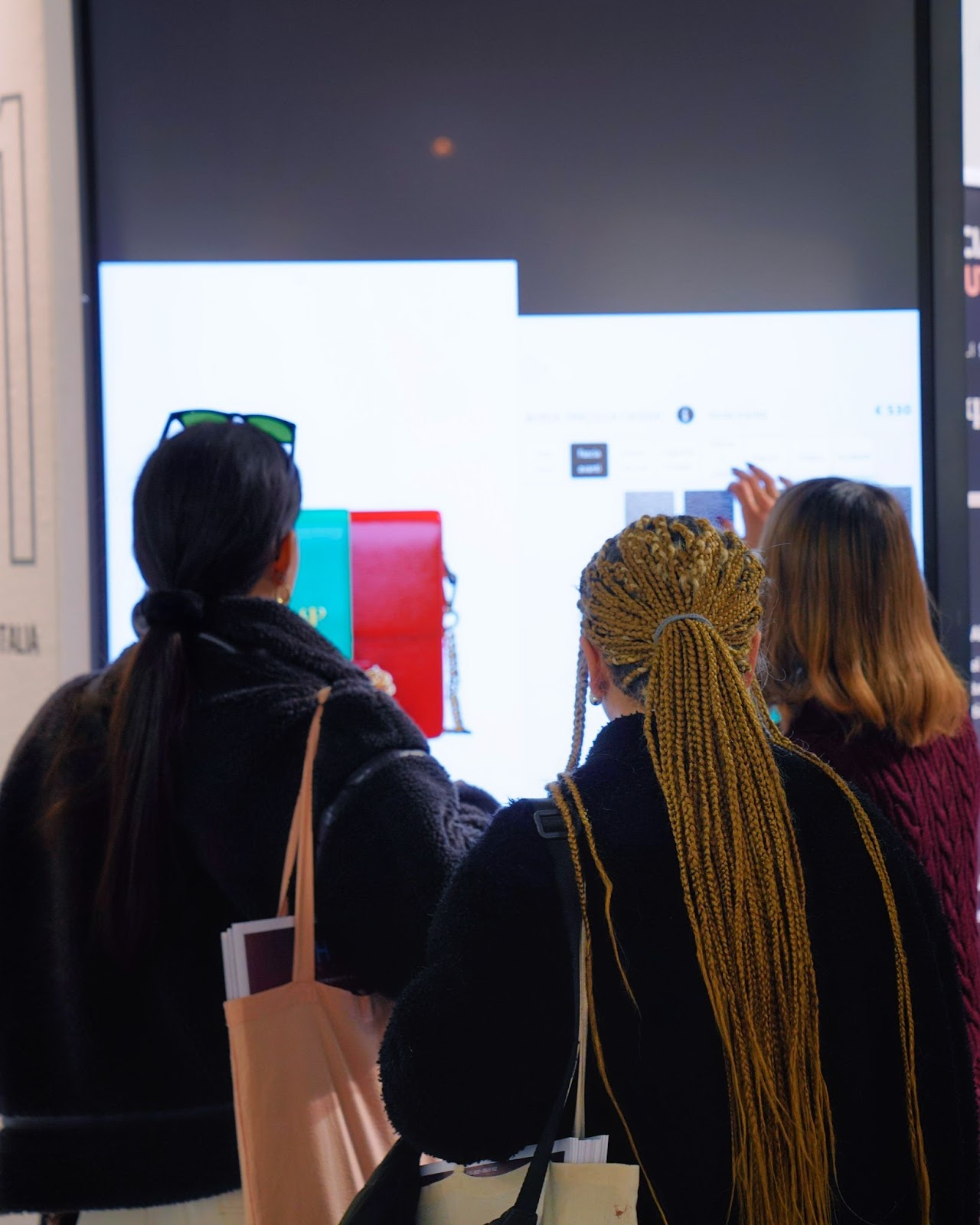
The Limitations (and How the Industry Is Overcoming Them)
Despite the progress, virtual try-on tools are not yet perfect.
What are the current challenges to be addressed?
- Difficulty in realistically rendering fabrics (especially flowing fabrics like silk or sheer fabrics)
- Limitations in customization for “non-standard” body shapes
- High cost of implementing the most advanced tools
- The need to train users on how to use them
A rapidly expanding market
According to Statista, the market for virtual fitting technologies will exceed $15 billion by 2030. But let’s take a look at which major brands are investing in virtual technologies:
- Zara has introduced smart mirrors in its flagship stores
- Amazon has been experimenting for years with AI-based systems to help customers choose the right size
- Nike has developed “Nike Fit,” an app for scanning feet to find the perfect size
- Farfetch and Gucci have launched AR experiences for trying on sneakers and eyewear
Startups also play a central role, offering scalable SaaS solutions for small brands or marketplaces.
Phygital Fashion: The Hybrid Shopping Experience Transforming Retail
Fashion is undergoing a radical transformation: the integration of physical and digital experiences—known as phygital fashion—is revolutionizing the way consumers interact with brands. In innovative boutiques and concept stores, traditional retail meets technology, creating immersive and personalized shopping experiences.
A concrete example? Interactive kiosks for clothing stores. These aren’t just touchscreens, but true phygital tools for fashion retail, capable of increasing customer engagement and drastically reducing the need for inventory.
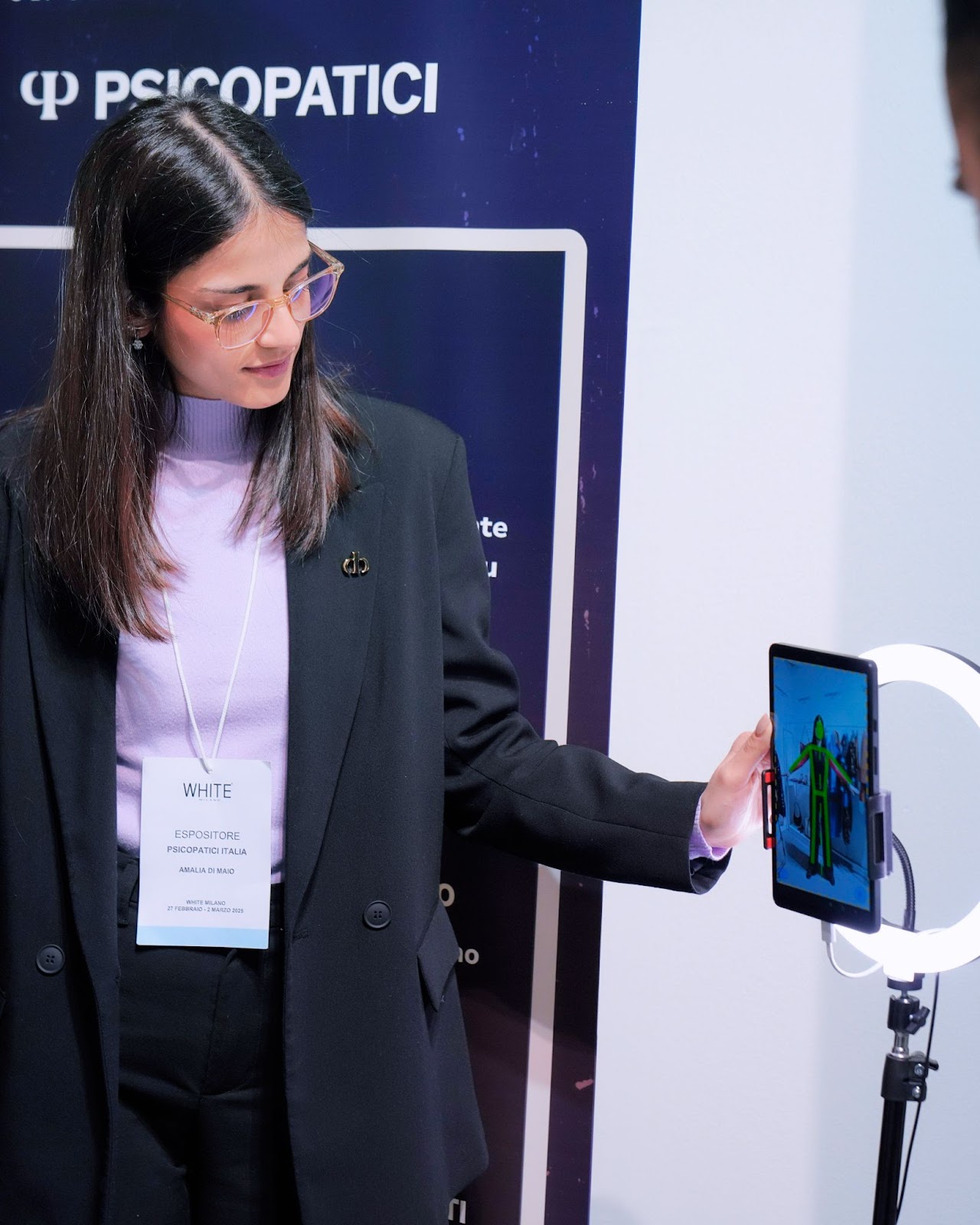
Psicopatici Italia: Technology, Identity, and Advanced Personalization
Psicopatici Italia stands out for its ability to embrace digital transformation in the fashion industry without compromising its nonconformist aesthetic, placing the concept of the phygital experience at the heart of the shopping model.
With the introduction of the Interactive Touch Totem, strategically placed at selected events and physical locations, Psicopatici Italia offers the public a hybrid experience that combines creativity, technology, and the celebration of individual identity.
Touchscreen Kiosk: 3D Technology and Customization for Fashion Retail
The Interactive Touch Kiosk is not merely a tool for browsing, nor is it a channel for in-store purchases. It is a customization lab, accessible directly in the boutique. Through an intuitive interface, users can:
- Customize clothing items in real time, choosing colors, graphics, and tailoring details;
- View the changes through immersive 3D renderings to preview the final result;
- Once the purchase process is complete, use an app to scan their body and take their measurements, allowing Psicopatici Italia to virtually “tailor” the ordered product to the user, ensuring total customer satisfaction;
- Feel the fabrics and materials of sample garments displayed next to the kiosk, allowing customers to appreciate the quality of the craftsmanship and the richness and fineness of the materials;
- Place the order online, without needing to pay at the register, promoting integrated e-commerce through a completely cash-free experience.
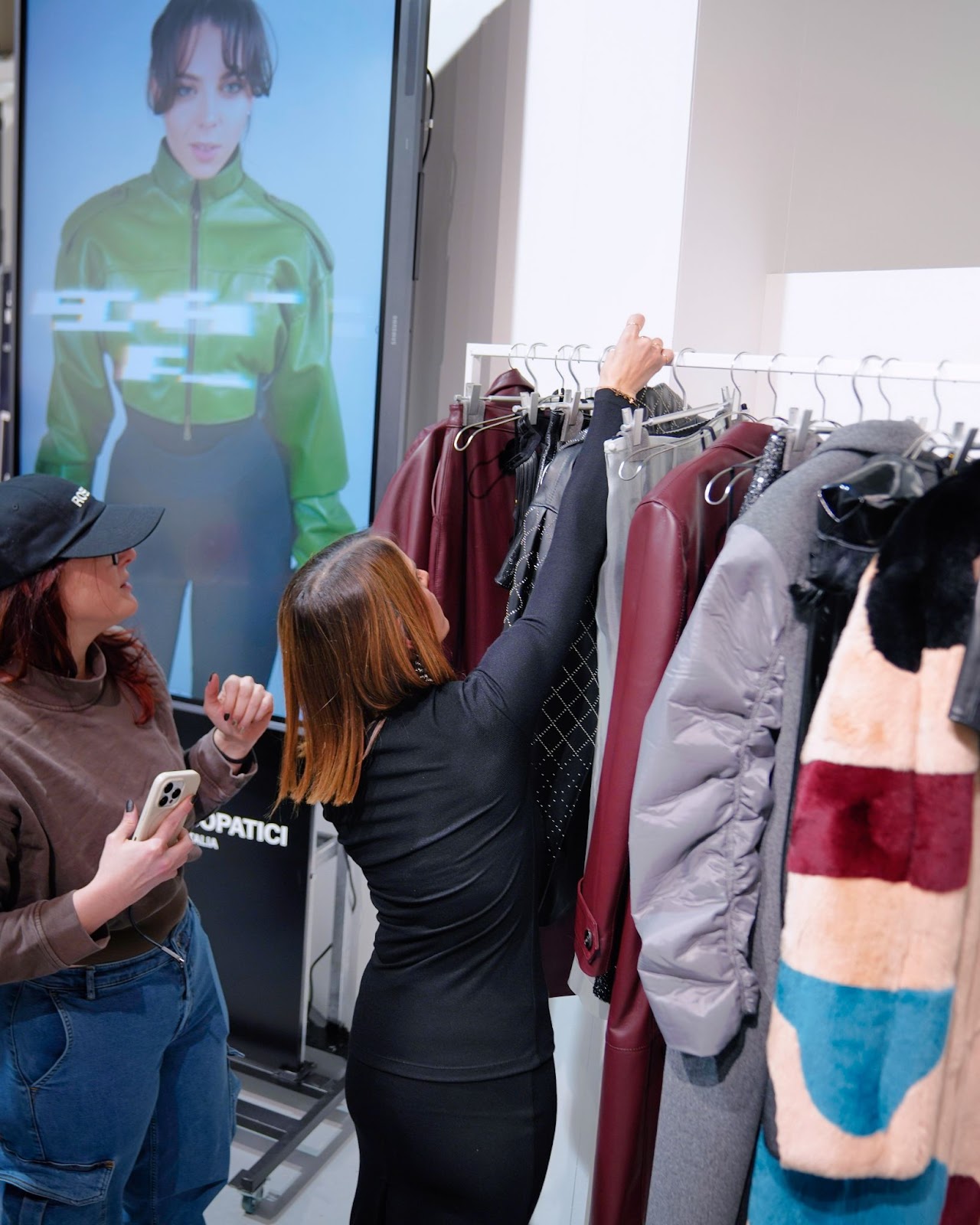
The Interactive Touch Kiosk as a Lever for Omnichannel Retail in the Fashion Industry
The phygital experience in fashion retail finds the perfect balance between creativity, technology, and customer engagement in the Interactive Touch Totem. Technology becomes the means by which the user can actively participate in the creation of their own garment, leaving a personal and intentional mark.
For fashion retailers, the benefits are numerous:
- Reduced physical inventory and streamlined warehouse management, with a more sustainable on-demand model;
- Expansion and enhancement of the product offering without the constraints of physical space;
- Simultaneous management of multiple fashion brands, even within small retail spaces.
Conclusion
Trying on a garment without actually wearing it, customizing it, feeling the real fabrics, and finalizing the order online: the future of fashion retail is already here and is shaped by hybrid and intelligent experiences.
With its Interactive Touch Kiosks, Psicopatici Italia is redefining the relationship between brands and consumers: this isn’t just about innovation, but about the strategic reinvention of human interaction through the lens of technology. In a market where identity and personalization are key to perceived value, phygital fashion represents the new frontier for those who want to stand out.